Short Term Rental vs Long Term Rental in Kissimmee Which Is Right for You
Monica Mendivil · September 15, 2026
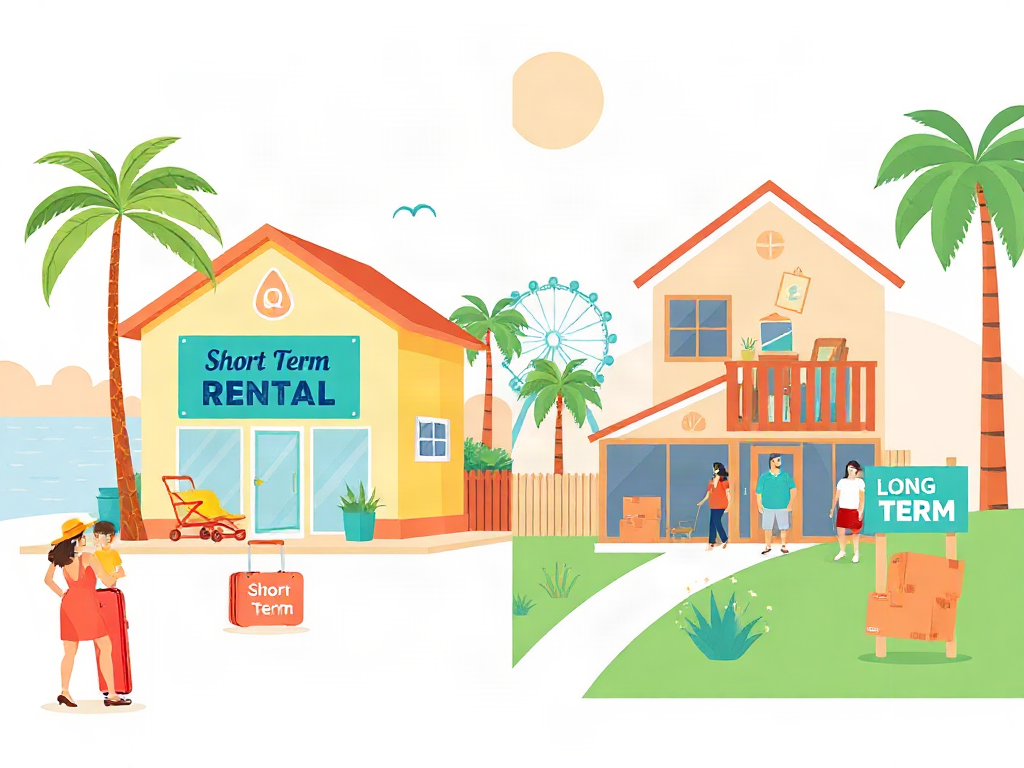
Short Term Rental vs Long Term Rental in Kissimmee: Which Is Right for You?
Kissimmee, Florida, occupies a unique position in the national real estate landscape. Sitting just minutes from Walt Disney World, Universal Orlando, and a sprawling ecosystem of theme parks, convention centers, and entertainment districts, this Osceola County city attracts tens of millions of visitors every year. That constant flow of travelers has created one of the most dynamic rental markets in the country, and it has also created a difficult decision for property owners and investors alike: should a home be used as a short term rental or a long term rental?
Both strategies can build wealth. Both can generate reliable income. But they reward very different types of owners, and they demand very different levels of involvement, planning, and local knowledge. At Sunshine Premium Properties, our team works with buyers, sellers, and investors across Kissimmee and the surrounding communities every day, and we have watched this question shape countless real estate decisions. This guide breaks down the short term rental versus long term rental comparison in detail so you can choose the path that fits your goals.
Understanding the Kissimmee Rental Landscape
Before comparing the two strategies, it helps to understand why Kissimmee is such a distinctive rental market. The city and its surrounding areas sit at the heart of Central Florida's tourism corridor. Vacation homes, condos, and townhomes near Disney and the major attractions have become a recognized asset class of their own, and buyers from across the country and around the world seek them out specifically for their income potential.
At the same time, Kissimmee is a real community, not just a tourist destination. Families live here year round. Professionals commute to Orlando and Lake Buena Vista. Students attend local schools. Neighborhoods range from gated resort-style communities to established subdivisions with long-standing residents. That mix means demand exists on both sides of the rental equation, which is exactly why the short term versus long term question is not a simple one.
Local expertise matters enormously in this market. Rules differ from one community to the next, HOAs often have their own restrictions, and the character of a neighborhood can change dramatically within just a few miles. Our Kissimmee real estate specialists help clients navigate those distinctions before they commit to a property.
What Is a Short Term Rental?
A short term rental is a furnished property rented to guests for brief stays, typically ranging from a few nights to a few weeks. In the Kissimmee area, short term rentals are most commonly vacation homes, condos, and townhomes positioned near the theme parks and attractions. Guests book them for family vacations, sports tournaments, conventions, and seasonal escapes from colder climates.
Short term rentals are often marketed through vacation rental platforms, direct booking websites, and professional management companies. Because they cater to travelers, they are usually fully furnished, stocked with linens and kitchen supplies, and designed to feel like a home away from home.
Key Characteristics of Short Term Rentals
- Furnished and guest ready, with amenities such as pools, game rooms, and themed bedrooms
- Income tied directly to tourism seasons, holidays, and local events
- Higher gross revenue potential per night compared to long term leases
- More active management, including guest communication, cleaning, and maintenance
- Subject to local regulations and community-specific rules
What Is a Long Term Rental?
A long term rental is a property leased to a tenant for an extended period, usually twelve months or longer. These rentals serve local residents, including families, workers, and professionals who need stable housing in the Kissimmee and Orlando area. Long term rentals are typically unfurnished or lightly furnished and are managed through standard lease agreements.
Long term rentals are the traditional backbone of real estate investing. They emphasize consistency over nightly performance, and they tend to attract owners who value predictable income and lower day to day involvement.
Key Characteristics of Long Term Rentals
- Leases of twelve months or more, often renewed year after year
- Income that remains relatively stable regardless of tourism cycles
- Lower operating costs, with no nightly cleaning or guest turnover
- Less hands on management, though tenant screening and maintenance still matter
- Strong appeal to residents who work in the region year round
Income Potential and Seasonality
One of the most common reasons owners choose short term rentals is revenue potential. Nightly rates in the Kissimmee vacation home market can be substantially higher than the equivalent daily value of a long term lease, especially during peak travel periods. During school breaks, summer vacation season, and major events, demand surges and occupancy can remain high for extended stretches.
However, that income is not uniform across the calendar. Tourism in Central Florida is seasonal, and short term rental revenue rises and falls with travel patterns. Owners must plan for slower weeks and months, and they must understand that gross revenue is not the same as net profit. Furnishings, utilities, cleaning, platform fees, and management costs all reduce the bottom line.
Long term rentals take a different approach. Monthly rent tends to be consistent, which makes budgeting simpler and reduces the impact of tourism fluctuations. The tradeoff is that the ceiling on income is generally lower, and rent increases typically happen only at renewal or when a lease ends.
For many investors, the real question is not which option earns more in a single month, but which option produces more reliable results over several years. A Kissimmee investment property can support either strategy, and the right answer depends on how much variability an owner can comfortably absorb.
Management Responsibilities and Time Commitment
Short term rentals are active businesses. Guests arrive and depart constantly. Questions come in at all hours. Cleanings must be scheduled between stays. Supplies need restocking. Maintenance issues require fast responses because guest reviews and repeat bookings depend on the quality of the experience.
Owners who live far from Kissimmee often rely on professional property management to handle these demands. Even with support, though, short term rentals require ongoing attention to pricing, marketing, and guest satisfaction. A single difficult review or a poorly maintained property can affect future bookings.
Long term rentals are considerably more passive. Once a qualified tenant is in place, the owner's responsibilities narrow to routine maintenance, occasional repairs, and lease administration. Communication is less frequent, and the property does not need to be guest ready at all times. For owners with demanding careers, busy family lives, or distant residences, that lower intensity can be a major advantage.
Regulations, HOAs, and Local Rules
This is where local knowledge becomes essential. Short term rental rules in the Kissimmee area are not uniform. Some communities welcome vacation rentals and are built around them. Others restrict them, cap occupancy, require registration, or prohibit them entirely. HOAs frequently impose their own conditions on top of municipal requirements.
Before buying any property with the intention of renting it short term, it is critical to confirm what is actually allowed. A home that appears perfect on paper can turn out to be ineligible for the strategy an owner intends to use. Reviewing community documents, speaking with the association, and verifying local requirements should happen before an offer, not after closing.
Long term rentals face fewer of these specialized restrictions, though occupancy limits, property standards, and lease requirements still apply. In many neighborhoods, long term rentals are simply part of the normal fabric of the community.
Our team regularly guides clients through these details, and resources such as our guide to buying a short term rental in Central Florida can help frame the early research.
Financing and Property Insurance Considerations
Financing can differ between the two strategies. Lenders may treat a property intended for short term rental use differently than a standard primary residence or a traditional long term rental. Down payment requirements, interest rates, and documentation can vary, and some loan programs place limits on how a property may be used.
Insurance is another important distinction. Short term rentals typically require specialized coverage that accounts for frequent guest turnover, commercial-style use, and higher liability exposure. Standard homeowner policies often do not fully cover that activity. Long term rentals generally use landlord policies, which are a well established category with predictable terms.
Understanding these differences early helps owners avoid surprises and plan their finances accurately. A conversation with a knowledgeable real estate professional before making an offer can save considerable time and expense later.
Wear and Tear on the Property
Every rental property experiences wear, but the pace differs. Short term rentals host a rotating cast of guests, each arriving with luggage, using appliances, and moving through the home with less familiarity than a resident would. Furniture, flooring, linens, and fixtures tend to age faster. Frequent cleaning, while necessary, also adds up over time.
Long term rentals experience the gradual, predictable wear of daily living by people who treat the property as their home. Tenants generally take more care because they live there continuously, and replacement cycles for furnishings are far less frequent since most long term rentals are not heavily furnished to begin with.
Owners should plan for both scenarios but budget differently. Short term rentals benefit from a maintenance reserve that anticipates frequent turnover and guest-related repairs. Long term rentals benefit from a reserve focused on systems, appliances, and occasional turnover between tenants.
Taxes and Financial Reporting
Both strategies carry tax implications, and both can offer deductions related to property expenses, depreciation, and operating costs. Short term rentals may be treated differently depending on how many days the property is rented and how much personal use the owner claims. In some cases, the level of service provided to guests can influence how income is classified.
Long term rentals follow a more familiar pattern for most investors, with rental income reported and expenses deducted in a straightforward manner. Because tax situations vary widely, owners should consult a qualified tax professional who understands Florida rental property. The goal here is awareness, not improvisation.
Which Strategy Fits Which Owner?
There is no universally correct answer, but there are clear patterns. The following questions can help clarify the right direction.
Short Term Rental May Be the Better Fit If:
- You want to maximize income potential and can tolerate seasonal variation
- You are comfortable with active management or willing to hire professional support
- You are buying in a community that permits and supports vacation rentals
- You want the option to use the property personally during part of the year
- You are targeting the tourism and attraction-driven market near Disney and Orlando
Long Term Rental May Be the Better Fit If:
- You prioritize steady, predictable monthly income
- You prefer a lower level of day to day involvement
- You want to avoid the complexities of guest turnover and seasonal pricing
- You are investing in a neighborhood oriented toward year round residents
- You plan to hold the property for many years and value simplicity
Some owners ultimately pursue both strategies across different properties, using long term rentals for stability and short term rentals for growth. That blended approach can work well for investors with the resources and interest to manage two distinct models.
The Role of Location Within Kissimmee
Location matters more than almost any other factor. Proximity to the theme parks, major highways, shopping, and dining strongly influences short term rental performance. Communities designed for vacation use often include amenities that guests expect, such as resort pools, clubhouses, and gated access.
For long term rentals, the priorities shift toward schools, commute routes, everyday conveniences, and neighborhood stability. A home that performs beautifully as a vacation rental may be less appealing to a year round tenant, and vice versa.
Our guide to the best neighborhoods in Kissimmee and our overview of gated communities can help buyers match a property to the intended rental strategy. For those focused on the vacation market, our short term rental homes and vacation homes near Disney resources offer a closer look at what is available.
Common Mistakes to Avoid
Owners on both paths sometimes make avoidable errors. A few stand out.
- Buying before confirming that short term rentals are permitted in the community
- Underestimating operating costs, especially for furnished vacation properties
- Assuming every month will perform like peak season
- Neglecting tenant or guest screening
- Choosing a property based on emotion rather than rental strategy
- Failing to plan for maintenance reserves and long term capital needs
Careful preparation addresses most of these risks. Working with local professionals who understand Kissimmee's communities, HOAs, and rental rules adds another layer of protection.
Making the Decision With Confidence
The short term rental versus long term rental decision comes down to your goals, your tolerance for involvement, and the specific property you are considering. Neither strategy is inherently superior. Each rewards owners who understand the market and plan carefully.
What matters most is aligning the property, the community, and the rental approach. A vacation home in a resort-style neighborhood near the attractions supports short term guests beautifully but may not suit a long term tenant. A family home in an established subdivision may generate steady rent for years but would not compete in the vacation market.
Kissimmee's position in Central Florida gives owners remarkable flexibility. The region's tourism engine and its growing residential base both create demand, which means the right strategy depends on the specific opportunity in front of you rather than a one-size-fits-all rule.
At Sunshine Premium Properties, we help clients evaluate those opportunities with local insight built on years of experience across Osceola and Orange counties. Whether you are exploring buying a home in Kissimmee, reviewing townhomes and condos, or planning a sale through our Kissimmee home selling services, our team is ready to guide you at every step. You can also explore our property management support and read what clients say on our reviews page.
If you are weighing short term rental versus long term rental for a Kissimmee property, or if you are simply ready to take the next step in your real estate journey, reach out to Sunshine Premium Properties. Visit our contact page or schedule a consultation at https://www.sunshinepremiumproperties.com/schedule-consultation.php to speak with a local expert who can help you choose the strategy that fits your goals. Your next investment decision deserves the clarity that comes from real local knowledge, and that is exactly what we deliver.